If you aren’t solving a specific problem that demands microservices, you’re likely creating more problems than you’re solving.
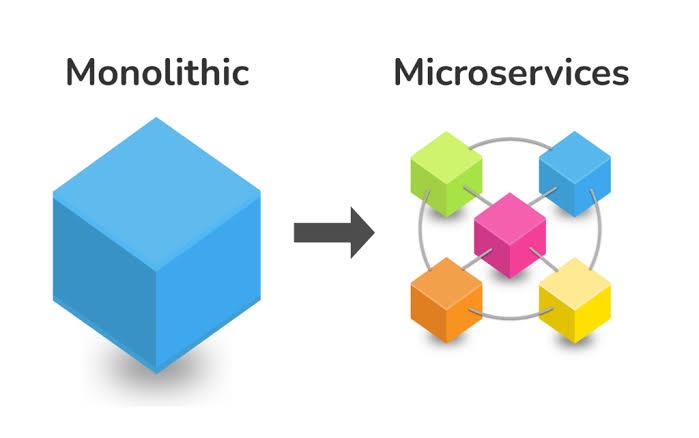
When it comes to architectural decisions, the lure of microservices is undeniable. You’ve read the success stories: scalability, modularity, independent deployments – a utopia of clean, manageable services. But let me tell you this: the true horror, pain, and suffering of microservices only reveal themselves when you run them in production.
This isn’t to say microservices are inherently bad. Quite the contrary – when done right, they solve specific problems extremely well. But “done right” isn’t easy, and the cost of getting it wrong is higher than you might imagine.
If you’re a small or medium-sized company, or even a team in the early stages of building software, start simple. The simplicity of a monolith isn’t a bad thing – it’s your safety net. I want to share some hard-won lessons that may save you from unnecessary chaos.
Microservices Look Good on Paper
On paper, microservices are simple:
1. Split your app into small services.
2. Each service owns one domain.
3. Services can scale independently.
4. Teams deploy and iterate faster.
Sounds great, right? Each service can be built, tested, and deployed independently. You no longer have to deal with a bloated monolith.
The reality, however, is much messier. Each “small” service adds complexity to your infrastructure, observability, testing, and coordination. The system as a whole becomes harder to debug, monitor, and scale holistically.
If you aren’t solving a specific problem that demands microservices, you’re likely creating more problems than you’re solving.
The Pain Points You Won’t See Coming
Here are the key challenges you’ll face once microservices hit production:
1. Distributed Debugging: Where Did It Fail?
When your monolith crashes, you know where to look: the single application logs, the database, or a debugger. With microservices, failures ripple across services, each with its own logs, metrics, and traces.
Imagine a user request traversing 10 services. If something fails, you now have to:
• Correlate logs across multiple systems.
• Determine which service failed.
• Figure out why it failed.
Without a proper observability strategy (tracing, logging, and metrics), debugging production issues becomes a nightmare. You’ll spend hours sifting through disconnected logs.
2. Deployment Hell
In a monolith, deploying is simple: one unit, one pipeline, one go-live. With microservices, you now have dozens or hundreds of services to coordinate. Even if each service is independently deployable, the dependencies between them introduce fragility.
A breaking change in Service A might quietly kill Service B until you realize what happened.
In production, this leads to:
• Dependency hell: Services breaking each other unintentionally.
• Version mismatches: Deployed code doesn’t align across environments.
• Longer release times: Coordinating multiple pipelines is no joke.
3. The Illusion of Independence
One of the key promises of microservices is independent teams working autonomously. In reality, few services are truly independent. Most services:
• Share data.
• Rely on the same downstream services.
• Use a common deployment platform.
Breaking a shared database or common API will ripple across multiple services, defeating the independence you hoped for.
4. Operational Complexity
Microservices require heavy operational investment:
• Observability: Logs, metrics, and tracing must be centralized.
• Service Discovery: Services need to find and talk to each other dynamically.
• Resiliency: Things will fail. You’ll need retries, fallbacks, and circuit breakers.
• Networking: Latency, timeouts, and load balancing must be managed.
If you don’t have the infrastructure in place to handle these, production incidents will come thick and fast.
Microservices Solve Problems You May Not Have
Microservices solve specific problems: scaling large teams, handling massive load, or managing disparate domains. For small teams or simpler systems, a monolith often makes more sense.
A well-architected monolith:
• Is easier to deploy and debug.
• Has fewer network calls, reducing latency.
• Allows you to focus on features, not operational overhead.
If you don’t yet have the problems microservices solve, you’re prematurely complicating your architecture.
Start Simple, Scale Smart
Here’s my advice:
1. Start with a monolith. Build a clean, modular monolith with strong boundaries between domains. Monoliths don’t have to be messy – you can use good design principles to keep things maintainable.
2. Solve real problems. Only move to microservices when you outgrow the monolith. Are teams blocked by shared code? Is deployment taking forever? Are certain modules demanding independent scaling? Those are good reasons.
3. Focus on infrastructure early. If you do decide to go the microservices route, invest in:
• Logging, tracing, and metrics.
• Deployment pipelines.
• Testing frameworks for distributed systems.
• Resiliency patterns like retries and circuit breakers.
4. Split gradually. You don’t have to go “all in.” Start by extracting a single domain or service from your monolith. Get that running smoothly in production before breaking out more.
Microservices are not a silver bullet. They won’t automatically make your system faster, your teams more productive, or your code cleaner. In fact, they’ll make everything harder until you have the right infrastructure, culture, and practices in place.
So before you jump on the microservices bandwagon, ask yourself: Do you need them?
 Ratnesh dubey
Leave a comment